

Introduction
Last month, I walked through a manufacturing facility in Bangalore. The facility manager showed me their electricity bill—it hit ₹45 lakhs monthly. I asked him, “Where’s all that energy going?” He shrugged. Nobody really knew.
That’s the problem most facility managers face. Your IoT Energy Monitoring Solutions aren’t about cutting corners or making people uncomfortable. They’re about knowing what’s actually happening inside your building. Right now, you’re probably bleeding money without realizing it.
I’ve seen it countless times. An air-conditioned conference room runs empty all weekend. A manufacturing unit leaves production lines humming even during breaks. Parking lot lights stay on even at noon. Nobody’s deliberately wasting—people just don’t see it happening.
Here’s where IoT-based energy management system changes everything. You get real eyes on your building. Instead of guessing, you know exactly which department consumed what and when. You see patterns you’d never catch manually.
But it goes deeper. IoT-based energy management solutions aren’t one-size-fits-all. IoT-based HVAC automation handles your climate control intelligently. IoT-based diesel monitoring solutions track every liter if you run generators. IoT-based building automation solutions tie everything together so your systems actually talk to each other.
I talked to a hospital administrator who implemented this. She said something stuck with me: “We’re not running a tighter ship—we’re running a smarter ship.” Her energy costs dropped 28% in six months. Staff didn’t notice any difference in comfort.
Let me walk you through what I’ve learned implementing these systems across different industries. This isn’t theoretical. It’s what actually works, what actually saves money, and how to avoid the pitfalls I’ve seen other organizations make.
How IoT-Based Energy Monitoring Solutions Work
I remember explaining IoT sensors to a plant manager who said, “It sounds complicated. We don’t need complicated.” He was right to be skeptical. But here’s the thing—it’s way simpler than it sounds. And once you see it in action, it makes perfect sense.
Think of it like this. Before IoT monitoring, managing energy was like flying blind. You got a bill at the end of the month—huge shock usually—and had no idea why. Was it the HVAC? The production line? Lighting nobody switched off? Total mystery.
The sensors change that equation entirely.
Understanding the Core Technology
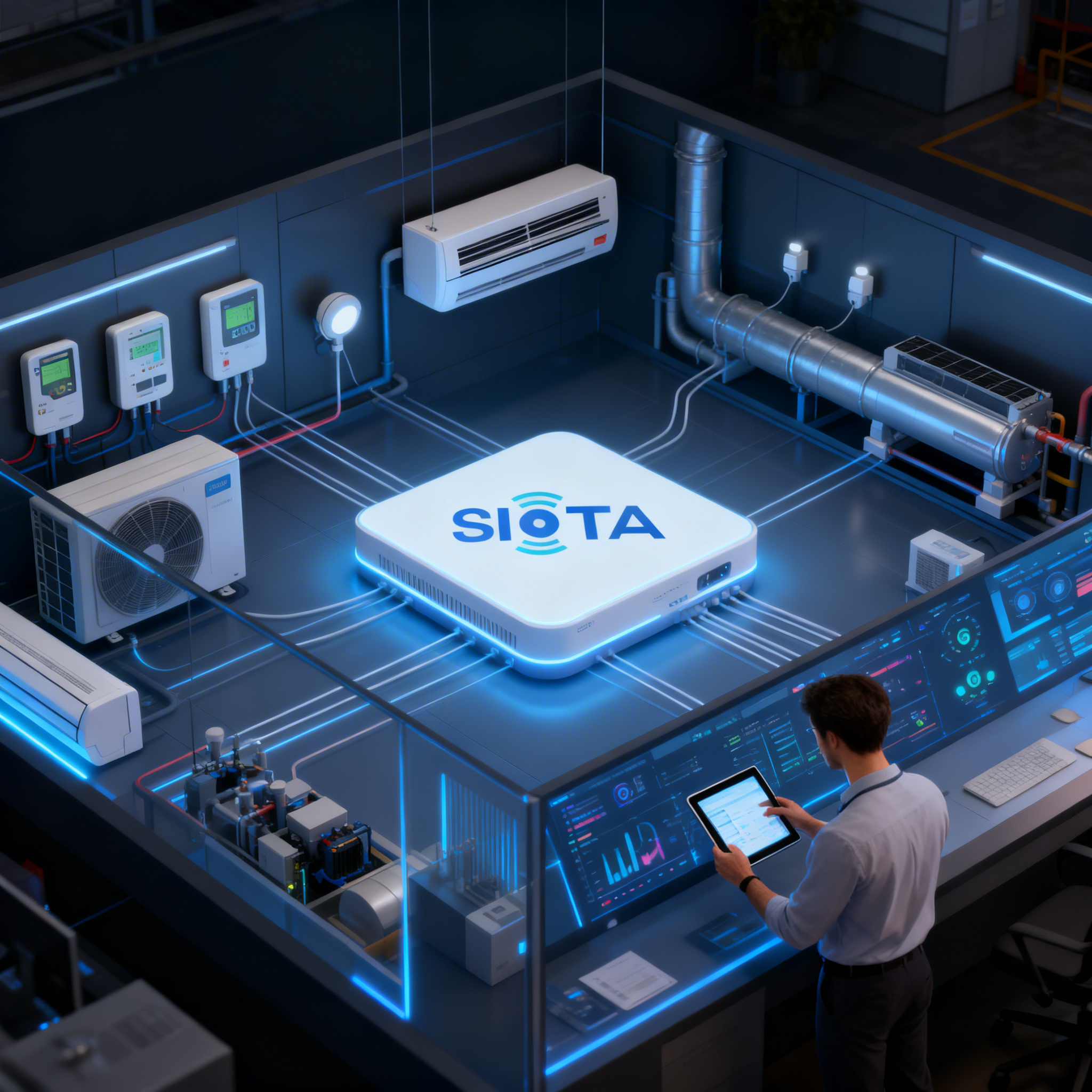
Here’s what actually happens. We place small sensors on your main electrical panel, your HVAC ducts, your major equipment. These aren’t expensive gadgets. Some look like little boxes, some like plugs. They sit there measuring electricity consumption, temperature, pressure—whatever makes sense for that system.
Every few seconds, these sensors send what they’ve measured to a cloud system. Not complicated data—just numbers. “Compressor used 45 kW at 2:30 PM.” “Lights in Section B drew 12 amps for 6 hours.” Simple stuff.
The magic happens in what we do with those numbers. Software analyzes patterns. A computer in the cloud says, “Wait, this compressor ran at 45 kW every afternoon this week, but it usually runs at 30 kW. Something’s different.” That’s when an alert goes to the facility manager.
Most systems have a gateway—think of it as a local translator. If internet goes down, the gateway still collects data. When connection comes back, everything syncs. You never lose information.
You look at a dashboard on your phone or computer. It shows you everything in real-time. You see which equipment’s running, which isn’t. You see live consumption numbers. Some setups show historical data too—consumption yesterday, last week, last month.
Real-Time Monitoring Benefits
I worked with a textile factory that didn’t realize their air compressor was leaking. Just a small leak—you couldn’t see it. But the system showed they were producing 15% less compressed air while consuming the same power. That leak cost them ₹2.5 lakhs monthly. They found it because the monitoring system showed something didn’t add up.
That’s real-time monitoring. You catch problems when they’re small, not when they’ve become disasters.
Here’s another example. An office building I consulted for had HVAC running at 6 PM even though everyone left at 5:30 PM. Nobody was doing it intentionally. The building manager just didn’t know. Once he saw that pattern on the monitoring dashboard, he changed the schedule. That single change saved ₹80,000 monthly.
Alerts are game-changers too. System detects equipment behaving oddly? You get notified immediately. Not at the end of the month when the bill arrives. Right then and there. You can investigate, fix it, before real damage or excessive consumption happens.
The system learns your building. It knows the difference between normal Tuesday consumption and normal Saturday consumption. It spots unusual patterns instantly. Someone left a machine running when they shouldn’t have? The system flags it.
IoT-Based Energy Management Systems: Components and Integration
When I first started explaining energy management systems, I’d talk about all the components—sensors, gateways, cloud platforms, dashboards. People’s eyes would glaze over. Now I think of it differently. It’s like a nervous system for your building. Each part has a job. Together, they give your building awareness.
Essential System Components
Let me break this down practically. You’ve got sensors—these are your eyes. A sensor on the main electrical panel watches everything flowing into your building. HVAC sensors monitor whether your air-conditioning is actually doing what it should. Lighting sensors know when people are in a room. Equipment sensors track individual machines.
Then you need something to collect all that information. That’s where gateways and controllers come in. I think of them as translators. Sensors speak their language. Your office systems speak different languages. The gateway translates between them. It’s also your backup—if internet fails, the gateway stores data locally and syncs when connection returns.
Cloud platforms are where the actual thinking happens. This is where patterns emerge. I consulted with a hospital that noticed their energy consumption spiked every Tuesday morning. Nobody understood why until we analyzed the data. Turns out, the surgical team started their week’s procedures Tuesday morning. Routine, consistent, predictable. The cloud platform spotted that pattern humans were missing.
Mobile apps keep you connected. I know facility managers who’ve stepped into meetings and realized something’s wrong with energy consumption just from checking their phone. They’ll excuse themselves, adjust something, and come back. That’s real-time control. One manager told me he’s fixed problems from airports during business trips. That’s the advantage.
Integration with Building Systems
Here’s where things get interesting. IoT-based HVAC automation is probably what you notice most. You know how some buildings feel perfectly comfortable while others have hot spots and cold spots? That’s usually poor HVAC coordination.
When I was at a retail shopping complex, different sections had completely different temperatures. The ground floor was freezing. First floor was warm. It’s terrible for customers and a waste of energy. With HVAC automation, the building now maintains consistent comfort, and energy consumption dropped by 30%.
How does it work? Multiple sensors throughout the building measure temperature. The system knows that the north-facing section gets afternoon sun and needs less cooling. The ground floor gets more foot traffic and needs more cooling. Instead of one thermostat for the entire building, it’s like having smart thermostats for every zone. Each zone gets what it needs. Nothing’s wasted.
IoT-based building automation solutions tie everything together. I’ve seen buildings where lighting is controlled separately, HVAC separately, security separately. They’re not coordinated. So HVAC is cooling an area while lighting is adding heat. Elevators run when nobody’s there.
When everything’s integrated, the building becomes coordinated. Morning comes—occupancy sensors detect people arriving. The system pre-cools the building, turns on lights where people are, elevators start running. Evening comes—people leave. Everything powers down automatically. No wasted resources. No manual switches.
I worked with an IT office where they installed integrated automation. The head of facilities said something I won’t forget: “For the first time, I feel like the building’s working for us instead of against us.”
Reducing Costs with IoT-Based Diesel Monitoring Solutions
When I first worked with facilities running diesel generators, I was shocked by how much fuel just disappeared. Nobody tracked it properly. A facility manager would order 1,000 liters, and two weeks later they’d order 1,200 liters. When I asked why the difference, he said, “I’m not sure. We use what we use.”
That’s why IoT-based diesel monitoring solutions exist. It’s not about high-tech for the sake of it. It’s about accountability.
Tracking and Reducing Fuel Waste
Let me give you a real example. I consulted with a construction company with multiple diesel-powered equipment on-site. One day, the site manager mentioned they spent ₹15 lakhs monthly on diesel. I asked him to show me consumption records. He didn’t have any. Just estimates.
We installed diesel monitoring sensors on their main generator and major equipment. Within a week, we discovered something startling. A specific piece of equipment was consuming 40% more fuel than normal. We investigated. The fuel injector was failing—it was spraying extra fuel inefficiently.
Cost of replacement? ₹25,000. Fuel waste in one month alone? ₹1.2 lakhs. They fixed it immediately. That sensor paid for itself in days.
Preventive maintenance becomes obvious with monitoring. Equipment that’s working normally consumes predictable amounts of fuel. When fuel consumption suddenly increases, something’s wrong. Not catastrophically wrong yet, but wrong enough to investigate. You fix small issues before they become big problems.
I worked with a pharmaceutical manufacturing facility with multiple production lines. Each line had a diesel-powered backup compressor. One line’s compressor started consuming 15% more fuel. The production team had zero idea. The maintenance team wasn’t tracking consumption. That 15% increase meant the equipment was working harder to produce the same output—efficiency was dropping.
The monitoring system flagged it. We checked the equipment. The valve was partially clogged. Cleaned it. Fuel consumption returned to normal. Total savings from catching that one issue? ₹3 lakhs monthly.
These aren’t dramatic stories. They’re the everyday reality of poorly monitored facilities.
Operational Optimization
Here’s something most people don’t think about. Diesel equipment doesn’t like running at partial load. An industrial compressor running at 30% capacity is actually less efficient than one running at 60% capacity. It’s counterintuitive but real.
I worked with a facility running two compressors. They’d start them both regardless of demand, thinking having backup compressors was safe. That was wasteful. The monitoring system showed load patterns. We configured it so one compressor handles normal load, second kicks in only when needed. Fuel consumption dropped 20%.
Fuel procurement becomes strategic. Instead of ordering randomly, you understand your consumption patterns. You know seasonal variations. You can negotiate better prices with suppliers because you can commit to consistent volumes. You avoid emergency orders at premium prices.
A manufacturing unit I consulted had this problem constantly. Production would spike unpredictably. They’d run out of diesel, pay premium prices for emergency fuel supply. Ridiculous inefficiency. With monitoring, they predict fuel needs two weeks ahead. They negotiate contracts based on actual requirements. That planning change alone saved them ₹45,000 monthly.
HVAC Automation: Precision Control Through IoT Technology
I spent last winter in a software company’s office. Every afternoon around 2 PM, the entire fourth floor became uncomfortably warm. Employees complained constantly. IT Support wasn’t involved—it was purely the HVAC system’s fault. But here’s the problem—the building had one thermostat for the entire floor. It was set to maintain 22°C, which is fine for most areas. But the fourth floor gets afternoon sun from the west. In winter, that sun actually helps. In summer, it makes certain areas unnecessarily warm.
That’s where IoT-based HVAC automation changed everything for them.
Smart Thermostat and Zoning
Traditional thermostats are dumb. They measure temperature in one spot and turn the HVAC on or off based on that single measurement. If the thermostat is in the corridor and you’ve got a server room 50 meters away, the server room might be overheating while the corridor is freezing. The thermostat doesn’t know. It just sees “We’re at 22°C, target is 22°C, so everything’s fine.”
Smart HVAC automation uses multiple sensors. The software company I mentioned? After installation, they had sensors on each floor in different zones. The west-facing area. The server room. The conference rooms. Open office space. Each zone gets monitored independently.
The system learned that conference rooms only need heavy cooling when they’re occupied. An occupancy sensor detects people. The system increases cooling. Room empties? Cooling reduces automatically. No wasted energy cooling empty rooms.
Server rooms have different requirements than office areas. The system maintains 18°C consistently in server rooms. Office spaces get 22-23°C depending on occupancy and sun exposure. Nobody manually adjusts anything. The system handles it.
Humidity monitoring prevents serious problems. I worked with a facility where humidity control failed, and within weeks, mold appeared in the ventilation system. Maintenance costs? ₹4 lakhs. Occupant health issues? Significant. With proper monitoring, humidity stays between 40-60%, preventing mold entirely.
Predictive Maintenance and Efficiency
Here’s what shocked me about preventive maintenance. Most facilities do reactive maintenance. The HVAC system breaks, you call the technician. He figures out what’s wrong. You pay ₹50,000 for the emergency repair. That’s just how it works.
With monitoring, you can predict problems before they happen. I worked with a hospital where a cooling unit’s compressor had a failing bearing. The bearing itself hadn’t seized yet, but the efficiency was dropping—subtle, consistent decline. The monitoring showed it. The hospital scheduled maintenance during a planned downtime. Cost of maintenance? ₹35,000. Cost of emergency shutdown during operational hours? Avoided entirely.
An office building I consulted with had refrigerant leaks in their HVAC system. Small leaks, almost imperceptible. But they meant the system worked harder to produce the same cooling. Equipment degradation was happening slowly. With monitoring, the system showed efficiency dropping 2% per week. We found and fixed the leaks. That catch saved them from catastrophic equipment failure that would have cost ₹8 lakhs to replace.
Equipment lifespan extends dramatically with proper monitoring. HVAC equipment typically lasts 12-15 years. With good preventive maintenance based on monitoring data? I’ve seen units last 18-20 years, still operating efficiently.
Compressor operation gets optimized automatically. A variable-speed compressor is like cruise control in your car. Instead of running at full speed, then stopping, then starting again, it modulates smoothly. Monitoring shows the optimal speed. The compressor runs at that speed consistently. Efficiency improves. Noise reduces. Equipment lasts longer.
Building Automation Solutions: Comprehensive Energy Management
I visited a corporate office building once where different departments occupied different floors. The second floor was occupied till 6 PM. The third floor’s people left at 5 PM. Fourth and fifth floors had staggered schedules. But the building’s HVAC ran on one schedule—full power till 8 PM regardless of occupancy.
That’s inefficient. But solving it manually is a nightmare. You’d need someone monitoring occupancy on each floor, adjusting HVAC schedules, managing lighting. That person would basically live in the building.
IoT-based building automation solutions handle all this automatically.
Unified Control Platform
One dashboard. I can’t overstate how important this is. When I first show facility managers a single dashboard showing everything—HVAC, lighting, elevators, security, energy consumption—they usually say something like, “Why haven’t I had this before?”
At a retail shopping complex I worked with, they finally could see that their underground parking always had lights on, even during business hours when nobody’s down there (automated vehicles handle parking). Second floor had different lighting needs than third floor. Conference rooms ran HVAC even when nobody was booked.
The dashboard made these problems visible. Visible means fixable.
Integrated scheduling prevents waste you don’t realize is happening. The building operates as a coordinated system, not independent parts. A corporate campus I consulted with had separate teams managing security, facilities, and operations. They’d argue about thermostat settings. Security wanted doors locked at 6 PM. Facilities wanted HVAC off by 6 PM. Operations needed elevators running till 6:30 PM.
With unified automation, these conflicts disappear. When security locks the building, the system knows. It powers down HVAC for empty areas. Elevators go to standby. Lights reduce to emergency levels. Everything makes sense because it’s coordinated.
Occupancy-based automation is underrated. I worked with an office building with 500 employees. Desk occupancy varies wildly. Some people work 9-5. Others come in at 7 AM. Some work from home randomly. Instead of maintaining full HVAC and lighting for 500 desks continuously, occupancy sensors detect where people actually are. The building conditions that space. Empty areas get minimal resources.
During normal hours, that building consumed energy for maybe 450 desks worth of space (some people home, some on leave, some in meetings). Smart automation meant the building only conditioned for 450 desks. That adjustment reduced consumption 10%.
Advanced Analytics and Reporting
This is where the real intelligence emerges. The system collects millions of data points. Facility managers see actual consumption patterns, not estimates.
I worked with a hospital that discovered their energy consumption peaked at 1 AM. Why? Delivery schedules. Massive refrigerated trucks came at midnight, requiring high cooling power. Nobody realized the correlation—administration just saw the peak and complained about it. With detailed analytics, the correlation became obvious. They shifted some deliveries to afternoon hours. Peak load decreased. Equipment didn’t have to perform at maximum capacity. Efficiency improved.
A manufacturing facility I consulted with used detailed reporting to allocate energy costs accurately. Before, electricity was split equally across departments. But Department A ran 24/7 production. Department B worked only day shifts. Department C was mostly just administrative. The old system made Department B subsidize Department A’s energy costs. Detailed reporting showed actual usage. Cost allocation became fair. Suddenly Department A had incentive to reduce consumption.
Benchmark reporting reveals whether your building is efficient compared to similar facilities. A school I worked with compared their consumption against other schools of similar size. They discovered they were 25% above average. That spurred investigation. They found aging HVAC needing replacement and lighting that hadn’t been updated in 15 years. Armed with benchmark data, they got board approval for upgrades. Savings paid for upgrades within 3 years.
Seasonal patterns become obvious with historical data. Summer cooling costs might be triple winter costs. But how much of that is normal? Reporting shows whether your summer consumption is typical. If you’re 30% above normal summer consumption, something’s wrong. Maybe there’s air-conditioner leakage. Maybe doors are propped open. The data guides investigation.
Implementing IoT Energy Solutions: Getting Started Successfully
I talk to a lot of facility managers who are interested in IoT energy solutions but intimidated by the implementation. They imagine months of disruption, complex technology, confusing dashboards. Let me be honest—that’s not what actually happens.
I’ve implemented these systems in dozens of facilities. The ones that succeed approach it practically. The ones that struggle overthink it.
Assessment and Planning
Start simple. Look at your last year of electricity bills. How much did you spend? ₹30 lakhs? ₹50 lakhs? ₹100 lakhs? That number represents waste opportunity.
Walk around your facility. Which areas feel uncomfortable? Which rooms are too hot? Where is cooling wasted? Talk to your maintenance team. They usually know where problems are—they just haven’t had tools to quantify it. That knowledge is valuable.
Set realistic goals. Don’t expect 50% reduction. That’s unrealistic. But 20-30% reduction? That’s achievable and typical for facilities that implement properly. Some of my clients reached 35-40%, but they were starting from terribly inefficient baselines.
Calculate what savings means for your operation. If you spend ₹50 lakhs annually on electricity, 25% reduction means ₹12.5 lakhs saved annually. That’s real money. A system costs ₹6-8 lakhs typically? It pays for itself in months.
For diesel-heavy operations, the math is even more compelling. A facility spending ₹15 lakhs monthly on diesel that reduces consumption 20% saves ₹3 lakhs monthly. Installation pays itself in 2-3 months.
Installation and Configuration
Here’s the truth—professional installation matters. I’ve seen DIY attempts where people tried to install sensors themselves. The results were disappointing. Sensors were placed in wrong locations. Data quality suffered. The whole system seemed underwhelming.
When you hire professionals, they survey your facility carefully. They understand your operation. They know where critical measurements should happen. They configure systems to your actual needs, not generic setups.
Start with priorities. If HVAC is your biggest cost, monitor that first. If you’re confused about energy allocation, monitor the main panel and critical equipment. Expand gradually. I usually recommend starting with monitoring only—no automation. Collect data for 2-3 weeks. Understand your patterns. Then add automation in phases.
Staff training is more important than you’d think. Your facility team needs to understand the system. They need to know how to read dashboards, interpret alerts, and adjust settings when appropriate. I’ve worked with facilities where the dashboard sat unused because the facility team felt uncomfortable with it. That’s a waste. Budget time for training. Make it hands-on. Not everyone learns from presentations.
Start automation with obvious things. If your HVAC is running when nobody’s in the building, automate that. If lighting runs all day in naturally lit areas, automate that. Get quick wins. Build momentum. Staff sees benefits. Adoption spreads naturally.
I consulted with a hospital that did this well. First month, they just monitored. Second month, they automated basic HVAC scheduling. Billing cycle later, they saw 8% reduction. That result built confidence. Third and fourth months, they added lighting automation and equipment-specific monitoring. By month six, they were at 28% reduction. The gradual approach built institutional buy-in.
Mistakes I’ve seen? Trying to automate everything immediately. The system becomes complex. Staff can’t understand it. Nobody trusts it. Gradual implementation builds understanding and trust. Start with simple, obvious automations. Add complexity as team capability grows.
Conclusion: Transform Your Energy Management Today
I started this article by mentioning a facility manager who didn’t know where his ₹45 lakh monthly electricity bill was coming from. He was frustrated. He felt helpless. The electricity costs kept rising, but he couldn’t pinpoint why.
Six months after implementing IoT energy monitoring, I asked him the same question. “Where’s the energy going?” This time, he had precise answers. “HVAC is using 35% of the total. Production equipment is 42%. Lighting is 15%. Other systems are 8%.”
More importantly, he said, “I can see exactly where the waste is. Last week, I noticed the third-floor HVAC was running inefficiently. Turned out a valve was partially stuck. I had it fixed. That single fix probably saves me ₹2 lakhs monthly.”
That’s the difference between guessing and knowing.
The systems I’ve described in this article aren’t new technology. IoT sensors exist. Cloud platforms are proven. Automation systems are reliable. They’ve worked for thousands of facilities across India and globally. The question isn’t whether these solutions work. They do. The question is whether you’ll implement them.
Your facility is probably wasting money right now. Not because anyone’s deliberately being wasteful. It’s because you don’t have real-time visibility. Without visibility, you can’t optimize. Without optimization, waste continues.
I’ve seen facilities save ₹15 lakhs monthly. Hospitals save ₹8 lakhs monthly. Manufacturing units save ₹12 lakhs monthly. These aren’t theoretical savings. These are real results from real facilities.
The implementation doesn’t need to be traumatic. Start with monitoring. Collect data. Understand patterns. Add automation gradually. Build comfort and capability over time. Twelve months in, you’ll have a completely different facility—more efficient, better controlled, significantly cheaper to operate.
Here’s what I’d do if I were in your position:
First, calculate your current energy spending. Get your last 12 months of bills. Add them up. That number is likely shocking.
Second, identify which systems consume most energy. HVAC usually dominates. Production equipment matters if you manufacture. Lighting and security contribute. Diesel consumption if you run generators.
Third, reach out to discuss your specific situation. Every facility is different. A hospital has different needs than a manufacturing plant. A retail space differs from an office building. Generic solutions don’t work. Your situation requires assessment.
I work with facilities across India implementing IoT energy solutions. I help them understand their consumption. I design systems specifically for their operations. I ensure implementations actually deliver promised results.
Visit https://siota.in/energy-monitoring-energy-management/ to explore options specific to your facility. You’ll find information on monitoring systems, automation solutions, and implementation approaches. But more importantly, you’ll connect with someone who understands facility energy management from experience.
Serious about reducing energy costs? Schedule a facility assessment. We’ll walk through your operations. We’ll identify your biggest waste sources. We’ll show you realistic savings potential. No obligation. Just honest conversation about making your facility more efficient.
Energy costs keep rising. The question is whether you’ll manage them intelligently or continue hoping they stabilize. Based on what I’ve seen, intelligent management wins every time.
Your facility can operate 25-35% more efficiently. Your staff can stay comfortable. Your operations can remain uninterrupted. Your costs can decrease significantly. The technology exists. The expertise exists. The question is when you’ll take action.
Don’t wait till next year’s bills arrive. Start now. The sooner you implement, the sooner you save. And those savings add up remarkably fast.
