

Let me be blunt about something.
Most facility managers in India know their energy bills are too high. They’ve known it for years. But without a proper energy management system in place, they’re essentially flying blind—paying for waste they can’t see, can’t measure, and therefore can’t fix.
The good news? That’s a solvable problem. And the solution isn’t complicated.
Over the past few years, IoT-based energy management has gone from being a luxury that only large corporates could afford to a practical, fast-deploying tool that mid-sized hospitals, hotel chains, factories, and office parks are using every day. The results are real — typically a 15 to 30 percent drop in energy spend within the first year.
This article walks you through everything you actually need to know: how these systems work, what they’re made of, what Indian facilities are gaining from them, and how to pick the right one without getting lost in vendor jargon.
What an Energy Management System Actually Does (No Jargon)
Here’s the simplest way to think about it.
Right now, your facility probably gets a monthly electricity bill. Maybe you have someone walk the floors, read sub-meters, and log numbers in a spreadsheet. By the time you spot a problem — a chiller running overnight when it shouldn’t, an AC unit in an empty wing that nobody turned off — you’ve already paid for it.
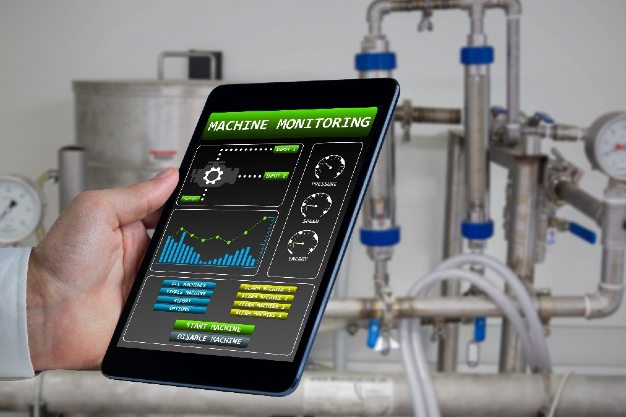
An energy management system flips that completely. Instead of looking backwards, you’re looking at what’s happening right now. Every panel, every HVAC unit, every DG set — all streaming live data to one dashboard, accessible from your phone or laptop, from anywhere.
The Difference Between Monitoring and Managing
This is a distinction worth making clearly, because vendors blur it all the time.
Monitoring means you can see what’s happening. Managing means you can do something about it — automatically, without someone needing to walk to a physical switch. A proper energy management system does both. It monitors consumption in real time, and it acts on what it finds: dimming lights in unoccupied zones, adjusting HVAC setpoints based on occupancy, and cutting off non-critical loads during peak tariff hours.
If a system only shows you data but leaves all the action to humans, that’s a monitoring tool. Useful, but not transformational.
Who Actually Needs One?
Honestly, any facility spending more than ₹4–5 lakhs a month on electricity has enough waste hiding in the system to justify an EMS. In practice, the facilities that gain the most are the following:
- Hospitals — where uptime is critical, temperature compliance is non-negotiable, and energy intensity per bed is a real metric that affects operating margins
- Hotels and resorts—where guest comfort and cost control pull in opposite directions, and centralised HVAC management is the only way to balance both
- Manufacturing plants — where machine-level energy tracking reveals which processes are inefficient and predictive maintenance prevents expensive production halts
- Commercial offices and IT parks — especially multi-floor, multi-location buildings where nobody has a complete picture of total consumption
- Retail chains—where standardising operations across 50 or 100 stores is nearly impossible without centralised data
What’s Inside a Modern Energy Management System
You don’t need to become an engineer to understand this. But knowing the components helps you evaluate vendors honestly.
IoT Sensors and Smart Meters
These are the ears and eyes of the system. Small sensors clip onto existing electrical panels, HVAC units, DG sets, water meters, and other assets. They measure current, voltage, power factor, temperature, humidity — whatever is relevant to that asset.
Critically, good sensors don’t require major civil work or rewiring. Most are wireless. Most can be installed in a day. SIOTA’s systems, for instance, are typically live within 48 hours of installation—which means you’re not looking at a six-month implementation project.
The Central Platform and Dashboard
All that sensor data flows to a cloud-based platform. The dashboard aggregates everything: consumption by floor, by asset, by location, by time of day. You can set custom thresholds and get alerts via SMS, email, or WhatsApp when something goes out of range.
The best platforms—and this matters more than most people realize—are genuinely intuitive. If your facility manager needs three days of training just to read the dashboard, you’ve got a problem.
Automated Control Layer
This is where the real savings come from. The energy management system doesn’t just observe — it acts.
HVAC automation is the single biggest lever for most commercial buildings. When the system knows a conference room is empty (via occupancy sensors or calendar integration), it doesn’t need a human to turn the AC down. It does it automatically, based on rules you set. Same with lighting. Same with DG startup sequences.
This is what separates a smart energy management system from a glorified meter reader.
Reporting and Compliance Outputs
A good EMS generates reports automatically—daily, weekly, monthly, or on demand. For companies under BRSR reporting obligations (mandatory for listed Indian companies, and increasingly expected of large unlisted ones too), this is genuinely valuable. The data is already there, already structured, already audit-ready. No scrambling at quarter-end.
How IoT Has Changed the Game for Indian Facilities
The Multi-Location Problem, Finally Solved
India has a scale problem that most Western case studies don’t address. A bank with 400 branches. A hospital network with facilities in six states. A retail chain with stores from Kochi to Chandigarh.
Managing energy across that kind of footprint manually is not just difficult — it’s effectively impossible. You end up with each location doing its own thing, nobody benchmarking against anybody else, and no way to identify which sites are systematically underperforming.
An IoT-based energy management system puts every location on the same platform. Your central facilities team can see in real time what the Pune office is consuming versus the Hyderabad office. If one location is 40% above benchmark, you know by morning — not by the time the bill arrives.
Predictive Maintenance: The Capability Most Facilities Underuse
This doesn’t get talked about enough. Modern energy management systems do more than track consumption — they track how equipment is consuming energy. And that’s a window into equipment health.
When a chiller starts drawing 15% more current than normal while delivering the same cooling output, that’s a signal. The bearings might be wearing. The refrigerant might be low. Something is wrong, and if you don’t act now, you’re heading toward an unplanned breakdown.
The EMS catches this. It sends an alert. Your maintenance team investigates before the failure happens. No emergency repair costs. No production downtime. No spoilage in a cold storage facility. No server room overheating.
For a hospital or a data center, this isn’t just a cost story—it’s a safety story.
DG Monitoring: More Than Just Fuel Tracking
Diesel generator management is a specific pain point for Indian facilities that international EMS products often handle poorly.
SIOTA’s approach to DG monitoring tracks fuel levels, runtime hours, load profiles, and consumption patterns continuously. When a generator starts unexpectedly, you get an alert. When fuel consumption doesn’t match runtime, you get an alert. Theft—which is more common than most facility managers publicly admit—becomes detectable in real time rather than showing up in a reconciliation exercise three weeks later.
Regulatory compliance for DG operations also becomes much simpler when your runtime logs and emission estimates are generated automatically.
What Facilities Are Actually Saving — Real Numbers
Energy Bills Down 15 to 30 Percent
This range comes up consistently across SIOTA deployments, and it’s worth understanding where it comes from.
The lower end — 15 percent — is typically what you see in facilities that already have some basic energy awareness and some controls in place. The higher end—and sometimes beyond 30 percent—is common in facilities that were operating almost entirely on manual processes, with no real-time visibility.
The savings come from three distinct places. First, passive waste elimination: HVAC and lighting running in areas with nobody in them. Second, load optimization: right-sizing equipment operation based on actual demand rather than worst-case assumptions. Third, failure prevention: catching equipment degradation before it leads to energy-hungry malfunction.
None of these require dramatic operational changes. The system does the heavy lifting.
BRSR Compliance Without the Quarterly Scramble
For any company filing BRSR disclosures, the data collection process is painful. Multiple sites. Multiple meters. Multiple people chasing numbers. Then reconciliation. Then formatting.
An energy management system generates all of this automatically. Energy intensity per square foot, per unit of production, per occupied room—whatever metric your reporting requires—is available on demand, with audit trails intact.
Operational Control Across Every Location
Beyond cost savings, there’s a less talked about benefit: peace of mind. Knowing that if anything goes wrong at any of your facilities at 3 AM, you’ll know about it before it becomes a serious problem—that has real value that doesn’t always show up in an ROI calculation but absolutely shows up in operational stability.
How to Choose the Right Energy Management System (Without Getting Burned)
A lot of vendors in this space will promise the world and deliver a dashboard. Here’s what to actually evaluate.
Ask About Integration Before Anything Else
Your facility has existing equipment—chillers, AHUs, DG sets, lighting panels—from various manufacturers and of various ages. A good energy management system should be able to connect to all of it. Ask specifically about protocol support: Modbus, BACnet, MQTT, and SNMP are the ones that matter most. If a vendor says their system only works with their own hardware, walk away.
Deployment Time Is a Real Signal
How long from signing a contract to having live data on the dashboard? If the answer is more than a week for a standard deployment, that’s a red flag. The technology exists to go live in 48 hours. Vendors who need months are either over-engineering or under-resourcing.
Look at the dashboard honestly.
Ask for a live demo on actual client data, not a canned product demo. Navigate it yourself. Could your facility team use this without constant hand-holding? Is the alerting system actually useful, or does it fire so many notifications that people start ignoring them?
BRSR and ESG Reporting Has to Be Built In
Don’t accept “we can export data to Excel and you can build your own reports” as an answer. BRSR-ready reporting should be a standard feature, not a professional services engagement.
Support After the Sale
This matters more than most buyers realize at the time of purchase. An energy management system is live infrastructure. When an alert fires at midnight, you need to know there’s someone who can help. Ask specifically: What is the SLA for response? Is there a dedicated account manager? What does the escalation path look like?
Frequently Asked Questions
What exactly is an energy management system, and how does it work?
It’s an IoT-based platform that connects to your facility’s electrical and mechanical assets—meters, HVAC units, DG sets, and lighting circuits—through sensors. Those sensors stream data continuously to a central dashboard. You can monitor consumption in real time, set automated controls, and receive alerts when something goes wrong. Unlike manual monitoring, there’s no lag. You see problems as they happen, not after you’ve already paid for them.
How much can I realistically save on my electricity bills?
Most Indian commercial facilities see 15 to 30 percent savings in the first year. The range depends on how much passive waste exists before the system is installed. Facilities with no prior energy management infrastructure often save more — sometimes exceeding 30 percent. The savings come from eliminating waste in unoccupied areas, optimizing equipment scheduling, and preventing costly equipment failures.
How long does installation take? Will it disrupt our operations?
A modern IoT-based system like SIOTA’s typically goes live within 48 hours. Sensors are wireless and clip onto existing infrastructure — no major rewiring, no production downtime, no civil work in most standard deployments.
We have facilities across multiple cities. Can one system manage all of them?
Yes, and multi-location management is actually where these systems shine most. Every location streams to the same central dashboard. Your team in the head office can see what’s happening in every branch in real time, set consistent operational policies, benchmark locations against each other, and get alerts from any site—all from one screen.
Does this help with BRSR compliance?
Directly, yes. The system automatically generates energy intensity data, consumption logs, and audit-ready reports in the format BRSR requires. This eliminates the quarterly manual data collection process that most compliance teams currently dread.
Can it integrate with our existing HVAC and electrical equipment?
As long as the system supports standard protocols—Modbus, BACnet, and MQTT—it can integrate with most existing equipment regardless of brand or age. This is a key question to ask any vendor before you commit.
What industries in India are seeing the best results?
Hospitals, hotels, manufacturing plants, commercial office buildings, retail chains, cold storage facilities, data centers, and bank branch networks are all strong use cases. The common factor is high energy spend combined with multiple assets or multiple locations that are difficult to manage manually.
Is predictive maintenance really part of energy management?
It is in any properly designed modern system. When equipment starts consuming more energy than normal for a given output, that’s a performance signal. The EMS detects it, alerts your maintenance team, and lets them intervene before the equipment fails. For hospitals and data centers especially, this isn’t just about cost—it’s about operational continuity and safety.
Final Thoughts
If you’ve read this far, you already know your facility is spending money it doesn’t need to spend.
The question isn’t whether an energy management system would pay for itself — it will, usually within the first 6 to 12 months. The question is how long you want to keep paying for waste you can’t see.
SIOTA has been deploying IoT-based energy management solutions across India’s most demanding facilities—hospitals, factories, hotel chains, and multi-location office networks. The system goes live in 48 hours. The savings start from day one.
If you want to see exactly how much your facility could save, the first step is a free demo.
→ Schedule your free demo with SIOTA
No obligation. No lengthy sales process. Just real data on what your facility is doing right now—and what it could look like with the right system in place.
